Roots and Fairways: How Greer Country Club Shapes Young Golfers Into Lifelong Champions

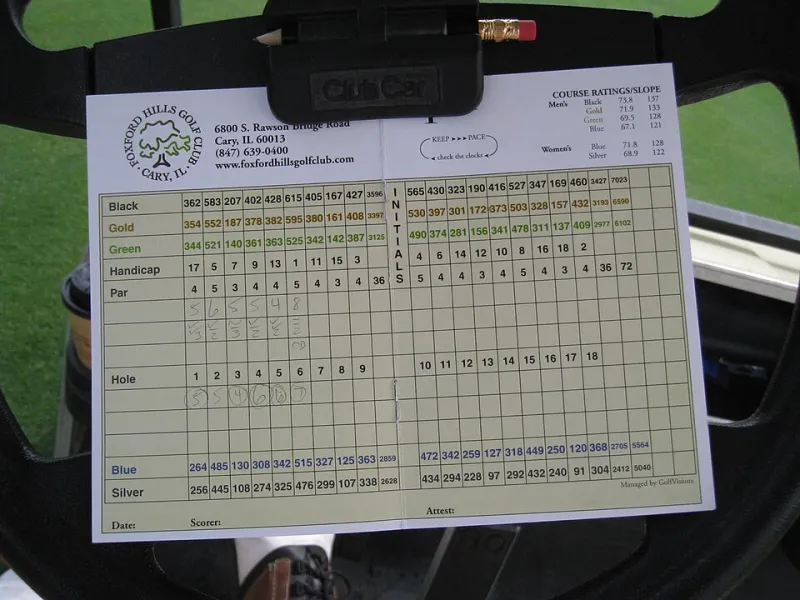
Photo: KuldeepKarki07, CC BY-SA 4.0, via Wikimedia Commons
Golf has always been a game of inheritance — not of wealth or privilege, but of knowledge passed deliberately from one generation to the next. The grip, the stance, the patience required to stand over a difficult putt without flinching: these are lessons that cannot be self-taught. They require time, repetition, and the guidance of someone who has already made every mistake worth making.
At Greer Country Club, the junior golf program embodies this inheritance in its most intentional form. Over the years, the club has developed a coaching infrastructure and a culture of mentorship that have transformed promising beginners into competitive players — and, more importantly, into young men and women who understand what the game truly demands of its participants.
Where Development Begins
The junior program at Greer is structured in tiers, designed to meet each young golfer at their precise level of development rather than advancing them prematurely through a standardized curriculum. Entry-level participants, many as young as seven, begin on the practice facility with foundational instruction focused on grip, posture, and the basic mechanics of contact.
"We don't put a scorecard in front of them for months," explains Head Instructor Robert Calloway, who has overseen the program for more than a decade. "The first thing we're teaching is a relationship with the club and with the ball. If that relationship is built on good habits, everything that follows becomes easier. If it's built on compensations and workarounds, you spend years undoing damage."
This patient, mechanics-first philosophy distinguishes Greer's approach from the results-oriented programs that have become increasingly common in junior golf. The emphasis is not on producing low scores quickly but on developing a swing and a mindset that will hold up under pressure years down the line.
The Mentorship Layer
Beyond formal instruction, Greer's junior program benefits from something that no curriculum can manufacture: the presence of experienced members who take a genuine interest in the development of younger players. Senior members frequently participate in structured mentorship pairings, joining junior golfers for casual rounds and offering the kind of course management wisdom that only comes from decades of play.
"There's a difference between knowing how to swing a club and knowing how to play golf," says longtime member and former club champion Harold Weston, who has mentored several juniors through the program. "Course management, reading conditions, understanding when to be aggressive and when to lay up — those things come from experience. When you can share that with a fifteen-year-old who has the physical tools, you're giving them something the range can't provide."
This mentorship model reflects the club's broader conviction that membership carries with it a responsibility to the institution and to those who will carry its traditions forward. The relationships formed through these pairings frequently extend well beyond the golf course, providing young members with professional connections and personal guidance that shape their lives in lasting ways.
Profiles in Progress
Among the program's current standouts is seventeen-year-old Nathaniel Greer — no relation to the club's founding family, though the coincidence is not lost on those who know him — who has advanced through every tier of the junior program and now competes regularly in regional amateur events. His trajectory from a tentative beginner at age nine to a single-digit handicap competitor is a testament to both his dedication and the quality of instruction he has received.
"Nathaniel came to us with enthusiasm and almost no technical foundation," recalls Calloway. "What he had was an unusual ability to absorb feedback and apply it immediately. That's rarer than raw talent. We've worked hard not to let the competitive results outpace his development, and I think that patience is going to pay dividends for him at the collegiate level."
Equally noteworthy is fourteen-year-old Claire Hutchinson, whose natural athleticism and competitive temperament have made her one of the program's most compelling younger participants. Already competing in junior girls' events across the Southeast, Claire credits the club's short game facility — recently expanded to include a dedicated chipping and bunker area — as the setting where her game underwent its most significant transformation.
"I used to be terrified of bunkers," she says with the candor that only a teenager can offer. "Now they're almost my favorite shot. We spent an entire fall just working on sand, and it completely changed how I think about the whole scoring area."
Facilities That Enable Excellence
The physical environment at Greer plays an indispensable role in the junior program's success. The practice facility offers a full-length driving range, a short game area, a putting green maintained to the same standards as the course itself, and a dedicated instruction bay equipped with launch monitor technology that allows instructors to quantify ball flight, spin rates, and clubhead data with precision.
These resources allow instructors to tailor feedback with a specificity that was unavailable to previous generations of coaches. When combined with the unhurried access that club membership affords — no tee time queues, no crowded ranges — the result is a learning environment that accelerates development without creating the pressure that often accompanies more competitive junior academies.
The Larger Purpose
For all the competitive accomplishments the program has generated, Head Instructor Calloway is careful to maintain perspective on what Greer's junior golf effort is ultimately designed to produce.
"We celebrate the players who go on to compete at the collegiate and amateur level — they're a source of real pride for the club," he acknowledges. "But the majority of our junior members will become lifelong recreational golfers, and that's an equally important outcome. If we send someone into adulthood with a genuine love of this game and the skills to enjoy it for the next fifty years, that's a success by any measure."
It is, in the end, the most enduring form of inheritance the club can offer — not a trophy or a ranking, but a game that will accompany a young person through every season of life, carrying with it the lessons, the friendships, and the quiet discipline that Greer Country Club has always stood for.