Rivals and Friends: The Enduring Spirit of Competition at Greer Country Club's Annual Championships
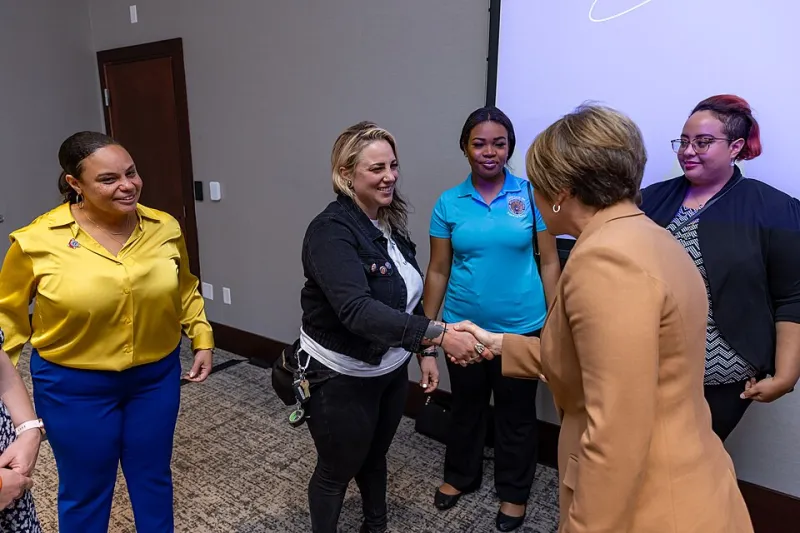
Photo: Joshua Qualls/Governor’s Press Office, Public domain, via Wikimedia Commons
There is a moment, familiar to anyone who has competed at Greer Country Club's Member Championship, that arrives somewhere around the fifteenth hole on the final day of stroke play. The leaderboard has thinned. The casual pleasantries of the early rounds have given way to something quieter, more focused. A competitor lines up a putt that matters — one that could separate him from a playing partner he has known for fifteen years, shared meals with, done business alongside, watched his children grow.
He makes the putt. His partner offers a handshake and a sincere word of congratulation. And both men understand, without needing to articulate it, that this is precisely how it is supposed to feel.
This is the particular character of championship competition at Greer — intense without being hostile, serious without sacrificing the bonds of membership that make the club what it is.
A Tournament Forged in Tradition
The Greer Member Championship traces its origins to the club's early years, when a small group of founding members agreed that a formal annual competition would serve a dual purpose: honoring the game's traditions of measured excellence and providing a meaningful focal point for the club's social calendar. Decades later, the tournament has grown considerably in participation and prestige, but its foundational spirit has remained intact.
The championship is conducted across multiple flights, ensuring that members of varying handicap levels compete on equitable terms. A gross championship flight draws the club's most accomplished players, while net divisions accommodate the full breadth of Greer's golfing community. This structure, deliberate in its design, means that the drama and consequence of competition are not reserved for scratch golfers alone.
"One of the things I've always admired about the way Greer runs its championship is that every flight matters," says Robert Calloway, a three-time net division champion and member of nearly two decades. "When you're standing on the first tee in your flight, it feels exactly as significant as anything happening in the gross division. The club treats it that way, and so the members do too."
The Psychology of Competing Against Friends
Sports psychologists who study amateur competition frequently observe a paradox: competing against those we know well can be simultaneously more motivating and more emotionally complex than facing strangers. At Greer, that paradox plays out across every round of the championship.
Dr. Patricia Holt, a Greer member who maintains a twelve handicap and has participated in the championship for eleven consecutive years, reflects on this dynamic with characteristic directness. "There is a part of you that wants to beat your closest friends more than anyone else on the course. Not out of animosity — quite the opposite. It's because you respect them. You want to earn the win against someone who will make you earn it."
This sentiment is echoed by James Whitmore, the current gross champion and a scratch golfer who has been a Greer member for eight years. "The friendships don't soften the competition — they deepen it. When I'm in contention with someone I've played with for years, there's a shared understanding of what this game demands. We're both trying our absolute best, and we both know it. That mutual respect makes the outcome meaningful, whichever way it goes."
Memorable Moments That Define the Championship's Character
Every long-running club championship accumulates its mythology — the shots that became stories, the moments that members recount at the bar long after the scorecards have been filed.
Perhaps no moment in recent Greer championship history is referenced more frequently than the 2019 gross final, in which two longtime playing partners — men who had shared a regular Saturday morning tee time for nearly a decade — reached the eighteenth hole tied. The playoff that followed extended to three extra holes before one man finally prevailed with a par that his opponent could not match. Observers recall that the two men walked off the course with arms around each other's shoulders, laughing about a misread putt from the second playoff hole.
"That's the image I keep coming back to when I think about what this championship is," says the club's Director of Golf Operations. "Not the scoreboard, not the trophy presentation — though both matter — but those two men walking together after one of the most competitive rounds either of them had ever played. That's Greer."
How the Club Cultivates the Culture
The atmosphere that makes such moments possible does not emerge spontaneously. It is the product of deliberate choices made at the institutional level — in how the tournament is organized, how it is communicated to members, and how the club's staff models the values they wish to see reflected on the course.
The championship pairings, for example, are constructed with social geography in mind. Members who know each other well are frequently grouped together in early rounds, reinforcing existing relationships while introducing competitive stakes. The format encourages conversation and sportsmanship through its pace-of-play expectations and the ceremonial weight given to the opening and closing rounds.
Post-round gatherings in the clubhouse are considered an essential component of the championship experience, not an optional addendum. The club hosts a formal dinner following the final round, at which champions across all flights are recognized with equal ceremony. This deliberate parity in celebration reinforces the message that participation and conduct matter as much as outcome.
"We want every member who competes to feel that the experience was worth having, regardless of where they finish," the club's general manager has noted on more than one occasion. "The trophy is for the champion. The experience belongs to everyone."
Preparing for Championship Competition
For members who have yet to enter the championship — or who are approaching it with renewed seriousness — several of Greer's past competitors offer practical counsel.
Calloway recommends treating the weeks leading up to the tournament as a deliberate preparation period rather than business as usual. "Play your practice rounds on the championship course configuration. Know where the pins are likely to be placed. Understand which holes will reward patience and which invite aggression. The members who win consistently are the ones who have a plan before they reach the first tee."
Whitmore emphasizes the mental dimension. "Manage your expectations about your friends' performances as much as your own. If you're paired with someone who is playing the round of his life, let that inspire you rather than unsettle you. The best competition brings out the best golf."
Holt, perhaps most practically, advises simply to enjoy it. "You will remember these rounds. You will talk about them for years. Play well, compete hard, and take care of the people you're playing with. That's the championship in its best form."
An Annual Renewal
Each year, as the championship week approaches, there is a discernible shift in the energy of Greer's morning tee times. Conversations turn to form, to course conditions, to the relative merits of one competitor's short game against another's driving distance. Friendships, rather than being set aside for the duration, become the very fabric through which the competition is woven.
At Greer Country Club, the scorecard has never been the whole story. It is the context — the years of shared rounds, the meals, the professional relationships, the handshakes across the eighteenth green — that gives every number on that card its full meaning.