When the Clubs Are Put Away: The Rituals and Stories That Define Life After the Round at Greer
Photo: Unknown, Public domain, via Wikimedia Commons
Ask a longtime member of Greer Country Club what they remember most vividly about their years at the club, and the answers rarely begin on the course. They begin in the grillroom, or at a corner table in the dining room, or on the east terrace on a September evening when the air had finally turned and someone had ordered a second round before anyone thought to check the time.
Golf, for all its demands and pleasures, is ultimately a prelude. The round sets the table — sometimes literally — for the hours that follow, and it is in those hours that the culture of a club reveals itself most honestly.
At Greer Country Club, the post-round traditions are not incidental to membership. They are, for many, the point.
The Signature Drink and How It Came to Be
No account of Greer's social customs would be complete without a proper introduction to the Greer Southside — the club's signature cocktail, which has occupied a permanent position on the bar menu for more than four decades.
The drink itself is a refined variation on the classic gin southside: fresh lemon juice, simple syrup, a generous measure of gin, and a crown of mint that perfumes the glass before the first sip. What distinguishes the Greer version is the addition of a thin slice of cucumber and a single dash of celery bitters, a modification attributed to the club's longtime head bartender, Raymond Oakes, who passed away in 2009 after thirty-one years of service.
"Raymond had an instinct for what people needed after eighteen holes in the Carolina heat," recalls member Patricia Dunmore, who joined the club in 1987 and has rarely missed a Saturday round since. "He watched members come off the course and understood that they wanted something cold and bright and slightly surprising. That cucumber was his idea, and nobody ever questioned it after the first sip."
The Greer Southside is now mixed by a new generation of staff, trained to Raymond's original specifications. It is served, without exception, in a frosted crystal highball glass — a detail the club's beverage director, James Alcott, describes as non-negotiable.
The Scorer's Table and Its Unwritten Laws
Before the drinks are poured and the stories begin, there is the settling of accounts — and at Greer, this ritual is conducted with a ceremonial gravity that newer members sometimes find surprising.
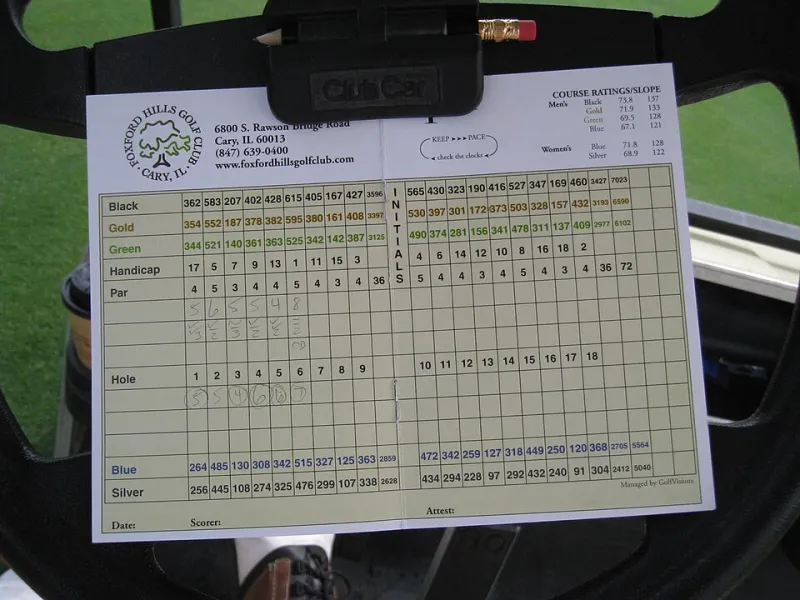
The scorer's table, positioned just inside the grillroom entrance, is where the day's results are tallied, side bets are honored, and the quality of each player's round receives its frank communal assessment. There are unwritten but universally understood protocols: the winner does not gloat before the loser has acknowledged the result, and the loser does not offer excuses before the winner has offered congratulations.
"It's a form of etiquette that the club has never had to formally teach," says longtime member Robert Calloway, who serves on the club's Membership Committee. "You watch how the senior members handle it, and you absorb the standard. A man who wins graciously and loses graciously at the scorer's table is a man who belongs here. It's as simple as that."
The tradition extends to a practice known informally as the "honest card" — a member's willingness to recount their round without embellishment when asked. At Greer, selective memory is considered poor form. The best stories, the membership has long understood, are the truthful ones.
Dinner-Table Debates and the Art of the Recap
If the scorer's table is where results are acknowledged, the dining room is where they are interpreted, argued over, and occasionally rewritten by collective memory.
Greer's dining room has hosted some of the most spirited non-political debates in the club's history — spirited, it should be noted, in the best sense of the word. Disagreements about club selection on the seventeenth hole, the proper response to a lateral hazard, or the merits of a particular playing partner's course management have fueled conversations that outlasted the dessert course by considerable margins.
Member and retired attorney Franklin Marsh, who has dined at the club on Friday evenings for twenty-two consecutive years, describes the dynamic with evident affection. "Golf is a game that generates opinions the way a fire generates heat," he says. "At this club, those opinions are expressed freely and received with good humor. I have been told in the most courteous possible terms that my approach to the par-fives is strategically indefensible. I consider those conversations among the great pleasures of my week."
The club's culinary team has long understood its role in these gatherings. The Friday evening menu — anchored by seasonal American fare and complemented by selections from the club's wine program — is designed to support long, unhurried meals. Courses arrive at a pace that encourages conversation rather than disrupting it.
The Sunday Morning Ritual
For a particular cohort of members, Sunday morning at Greer carries its own distinct set of customs. The early tee times — 7:15 and 7:30, typically reserved months in advance by the same rotating groups — are followed by a breakfast that has evolved over decades into something approaching ceremony.
The Sunday breakfast spread, served in the main dining room from nine o'clock until noon, features made-to-order eggs, carved ham, house-baked pastries, and a bloody mary bar that the club's events director, Catherine Holt, refers to as "the most democratic institution we operate." Members from every tier of the club's social hierarchy have been known to stand side by side at the bloody mary station, debating the proper ratio of horseradish to hot sauce with the same intensity they bring to everything else.
"Sunday morning is when you see the club at its most itself," says Holt. "The formality relaxes slightly. People are still dressed well, still conducting themselves properly, but there's a warmth to it that I think reflects what the membership genuinely values about this place. They want to be here. That's not something you can manufacture."
What These Traditions Preserve
In an era when the pace of American social life has accelerated considerably, the post-round traditions at Greer Country Club represent something worth examining carefully. They are, at their core, an argument for the value of unhurried time spent in the company of people who share your standards.
The rituals — the Southside, the scorer's table, the Friday dinner debates, the Sunday morning gathering — are not relics. They are actively maintained by a membership that understands their function. They create continuity between generations of members. They establish the behavioral norms that define what belonging to this club means. And they provide, in the most practical sense, the reason that members return week after week, year after year, long after the competitive fires of their playing days have mellowed into something more like gratitude.
The golf, in the end, is what brings everyone here. But the traditions that follow are what keep them.