Nine Holes, Full Purpose: The Thoughtful Case for Shorter Golf at Greer
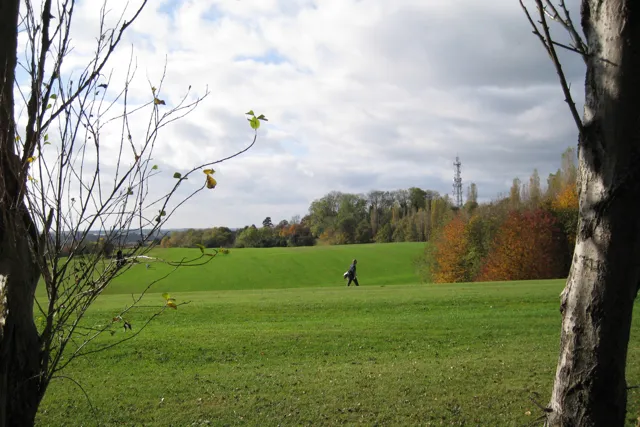
Photo: Robin Stott, CC BY-SA 2.0, via Wikimedia Commons
For generations, the measure of a serious round of golf was defined by its length. Eighteen holes represented the full expression of the game — its complete strategic arc, its emotional range, its proper demands on time and attention. Anything shorter was understood, at least informally, as something less: a warm-up, a convenience, a concession to circumstance.
That assumption deserves reexamination. Among Greer Country Club's most thoughtful members, the nine-hole round is undergoing a quiet and thoroughly earned rehabilitation — not as a substitute for the full game, but as a legitimate and richly rewarding format in its own right.
The Honest Arithmetic of Modern Life
The member who can devote five uninterrupted hours to eighteen holes on a weekday afternoon is rarer today than at any point in Greer's history. The professional landscape has grown more demanding, family obligations more complex, and the competition for discretionary time more intense. These are not lamentable developments — they are the natural conditions of a life fully engaged.
The nine-hole round meets those conditions honestly. It asks for roughly two hours, accommodates a schedule that would otherwise exclude golf entirely, and delivers an experience that, when approached with proper intention, satisfies the essential purposes the game has always served: competition, reflection, physical engagement, and the cultivation of relationships that matter.
To dismiss this format as inherently inferior to eighteen holes is to prioritize form over substance — a habit that serves no one well, on the course or elsewhere.
Strategic Compression as a Discipline
Perhaps the most underappreciated quality of the nine-hole round is the strategic compression it imposes. With only nine opportunities to execute, every decision carries proportionally greater weight. There is no back nine on which to recover from a poor front. There is no gradual settling into the round, no extended runway for recalibration.
This compression, far from diminishing the intellectual demands of the game, intensifies them. A member who approaches nine holes with genuine strategic intention must be more deliberate from the opening tee, more precise in his course management, and more disciplined in his risk assessment than a player who knows he has eighteen holes to find his footing.
Greer's course, with its varied terrain and demanding mid-round transitions, rewards this kind of focused engagement particularly well. The nine-hole configurations available to members present a complete set of challenges — elevation changes, demanding approach angles, and greens that require careful reading — without requiring the full afternoon commitment that the complete layout demands.
Skill Refinement Through Focused Repetition
There is also a compelling case for the nine-hole round as a tool of deliberate practice. The member who plays nine holes twice a week accumulates more rounds, more decisions, and more feedback loops over the course of a season than the member who plays eighteen holes once a week. Frequency of play, particularly for those working to address specific weaknesses in their game, is often more valuable than duration.
A member focused on sharpening his short game, for instance, will encounter more pressure-laden pitch shots and consequential putting situations across eighteen nine-hole rounds than across nine eighteen-hole rounds played over the same period. The repetitions are real, the competitive pressure is genuine, and the feedback is immediate.
Greer's instructional staff has long recognized this dynamic, and many of the club's most dedicated improvers have quietly structured their practice schedules around shorter, more frequent rounds rather than occasional full-day outings.
The Mental Clarity of a Contained Experience
Beyond strategy and skill, there is a psychological dimension to the nine-hole round that deserves acknowledgment. The human capacity for sustained concentration is not unlimited, and the honest golfer will admit that the quality of his decision-making across the final four holes of a long afternoon round is frequently inferior to the quality of his thinking in the opening hours.
Nine holes allows a member to play within his genuine attentional bandwidth — to maintain the focus, the routine discipline, and the emotional equanimity that produce both satisfying scores and satisfying experiences. There is a particular clarity available in a round that ends before fatigue has compromised judgment, and members who have embraced this format often describe their nine-hole rounds as among the most mentally present golf they play.
Relationships Forged in Two Hours
The social dimension of Greer's culture has always been among its most valued attributes, and the nine-hole round serves that dimension with surprising effectiveness. The two-hour format is ideally suited to the early morning round before a full professional day, the late-afternoon outing that concludes at the dining terrace before dinner, or the spontaneous pairing that transforms an ordinary Tuesday into a memorable one.
Conversations on a nine-hole round have a particular quality — unhurried despite the compressed format, substantive without the occasional drift that can accompany a longer afternoon. Members who have played together across dozens of nine-hole rounds often describe a depth of connection that rivals what develops across far more time-intensive outings.
Reclaiming the Game on Your Own Terms
Greer has always held that the game of golf, properly understood, is not defined by its length but by the integrity and intention brought to it. The member who plays nine holes with full commitment — honest scoring, thoughtful course management, genuine respect for the etiquette of the game — is playing better golf, in the truest sense, than the member who trudges through eighteen holes distracted and disengaged.
The nine-hole round is not a compromise. For Greer's most purposeful members, it is increasingly the format of choice — a deliberate, disciplined, and deeply rewarding way to engage the game they love within the life they have built.